Quick take: Search is not just a navigation feature. It is a retention system. When repeat shoppers cannot rediscover the right products quickly, your store leaks customer lifetime value through friction that is easy to miss and hard to measure without looking closely.
Many merchants obsess over first-order conversion and forget what happens after the first purchase. But repeat shoppers are often the most valuable customers you have, and they usually arrive with a very specific mission. They know your brand. They are trying to find the right thing fast.
If your search experience slows them down, you are damaging one of the healthiest parts of your revenue engine.
Why search affects lifetime value
Returning customers do not browse the store like first-time visitors. They want to restock, replace, upgrade, or explore something adjacent to a product they already trust.
That means search becomes a shortcut to repeat revenue. When it works, the experience feels effortless. When it fails, loyal shoppers feel the friction immediately because they expected the store to know them better than this.
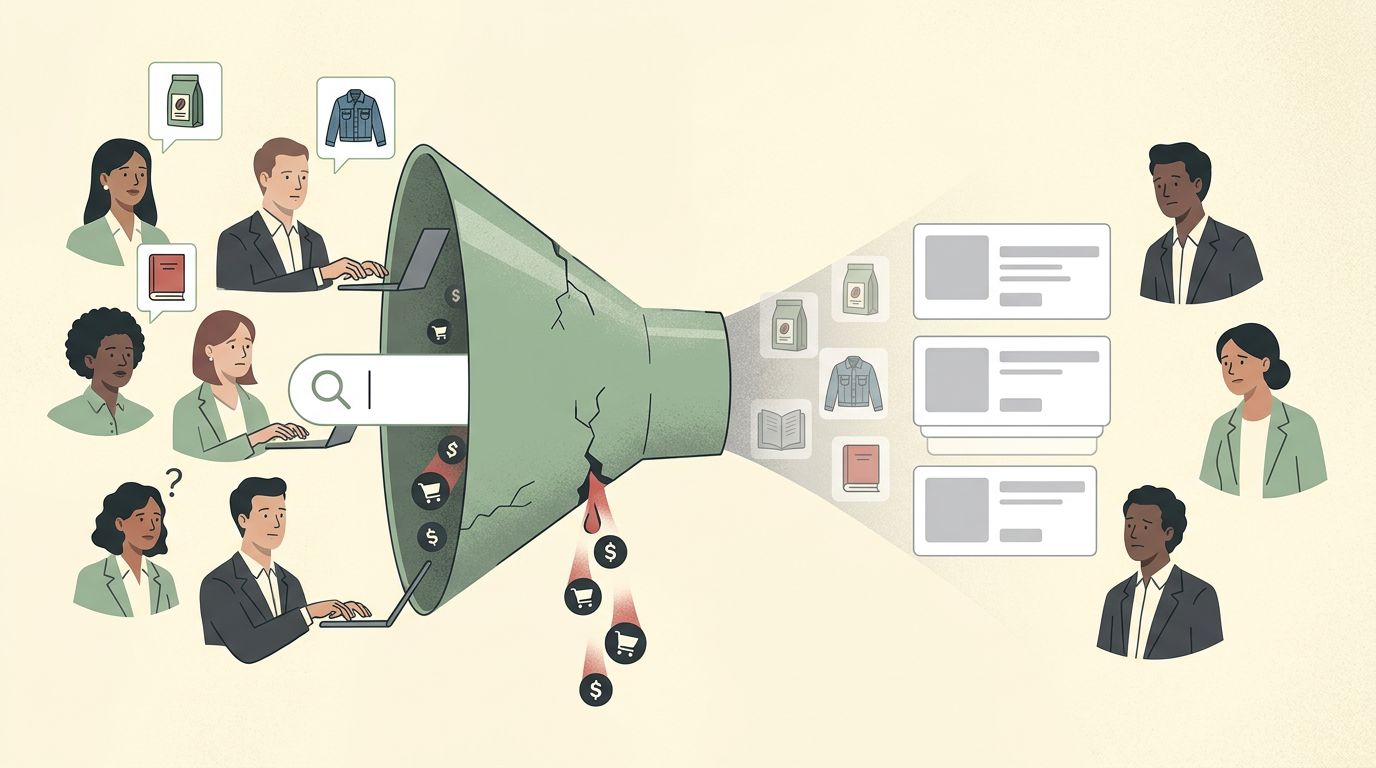
What broken search looks like in practice
| What the repeat shopper does | What they get | What you lose |
|---|---|---|
| Searches by need ("daily moisturizer dry skin") | Generic, cluttered results | Confidence — they leave to compare elsewhere |
| Remembers benefit or color, not exact title | Zero results or wrong product | The intended SKU sale |
| Looks for the bigger size or compatible add-on | Has to navigate manually through collections | Basket expansion — repeat AOV stays flat |
| Misspells or uses synonyms | Empty results page | The session entirely |
None of these shoppers open a support ticket to complain. They just leave.
Why repeat customers feel this pain more sharply
First-time visitors may tolerate some exploration because the whole store is new. Repeat buyers usually do not. They arrive with stronger intent and lower tolerance for effort.
That is why search friction can quietly hurt retention. It breaks the feeling of familiarity that repeat customers expect from a brand they already chose once.
How to diagnose the problem
Look for signals like these in your analytics:
- high search use combined with weak conversion from search sessions
- repeat visitors bouncing immediately after using internal search
- frequent support tickets that begin with "I couldn't find..."
- returning customers buying only one known SKU instead of broadening their basket
- high zero-result rate on common product attributes (color, size, ingredient)
If these patterns show up, your search bar may be acting like a revenue bottleneck.
Where AI search changes the game
AI search can improve repeat revenue because it better understands intent. Instead of demanding an exact keyword, it can interpret a shopper's need, connect it to relevant items, and guide them toward a solution more naturally.
That matters for restocks, routine building, compatible accessories, and replacement shopping. The assistant can help the customer say what they mean instead of guessing how your catalog is labeled.
Search is part of retention, not just discovery
It helps to think of search as part of your retention loop:
- A customer has a good first experience.
- They come back with trust and intent.
- Your store either makes re-discovery easy or makes it feel like starting over.
The stores that win repeat revenue usually make that third step very easy.
What to improve first
| Step | Action | Why it matters |
|---|---|---|
| 1 | Audit zero-result and low-result queries from the last 30 days | These are direct signals of unmet demand |
| 2 | Add the language shoppers actually use to product titles, descriptions, and tags | Closes the synonym gap traditional search can't bridge |
| 3 | Make variant and bundle navigation easier from the product page | Repeat buyers often want a different size, not a different product |
| 4 | Layer AI search where natural-language discovery matters most | Recovers the queries that conventional search drops |
You do not need to rebuild everything overnight. But you do need to treat search as a real merchant system, not a default widget.
Frequently asked questions
How much CLV is actually at stake?
It depends on category and repeat behavior. The pattern is consistent: stores with strong category coverage but weak search-to-cart conversion usually have a meaningful repeat-revenue gap hiding in the data.
Will adding AI search confuse first-time visitors?
Done well, no. Most AI search either replaces the default search or appears as a chat-style assistant the shopper opens when they want help. First-time visitors who type a clear keyword still get a clean keyword result.
Is this only a problem for large catalogs?
No. Smaller catalogs with high-consideration products (skincare, supplements, electronics, gifting) feel this pain too because shoppers describe needs, not SKUs.
If you want the broader comparison, read our guide to traditional vs AI search. For shopper-side assistants more broadly, read our 2026 buyer's guide or the Sidekick vs shopping assistants explainer.
See Dori if you want natural-language product discovery and product-page assistance in one workflow.