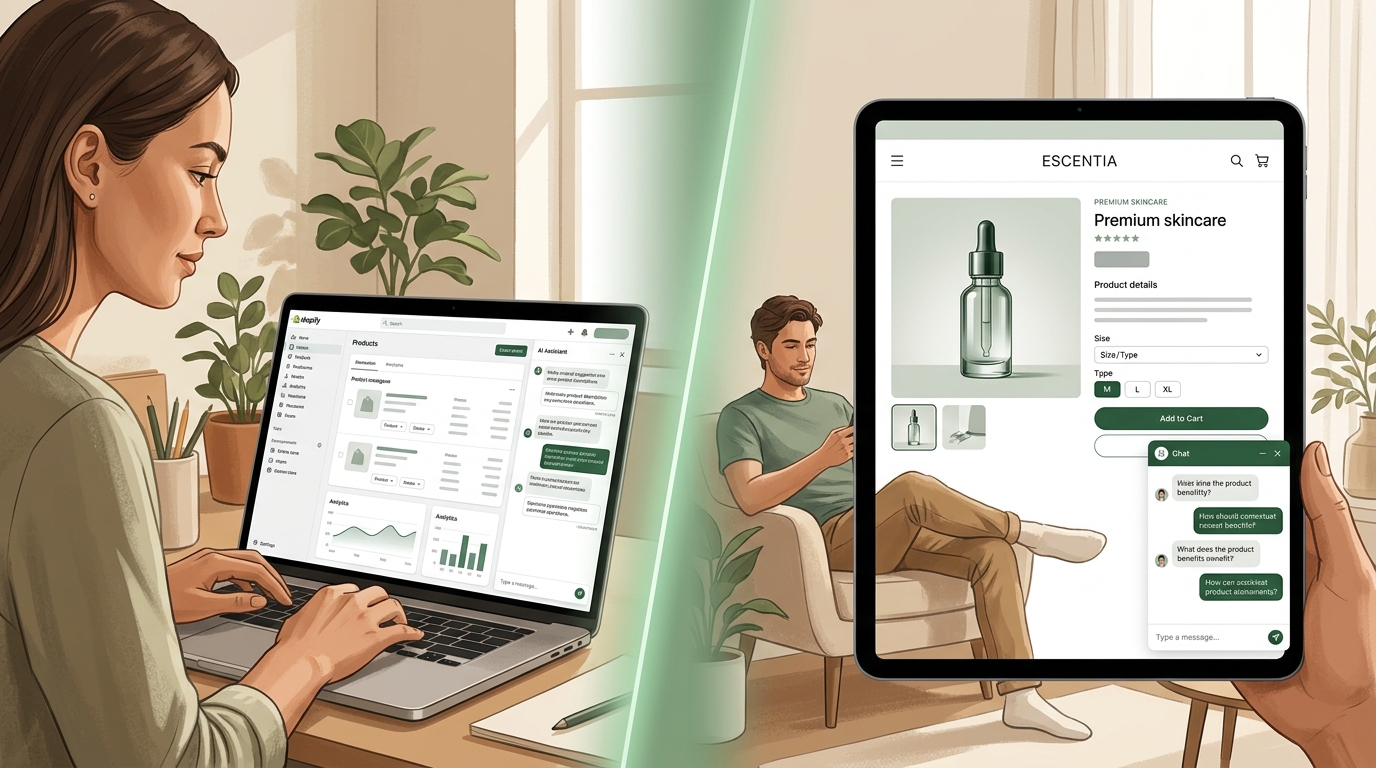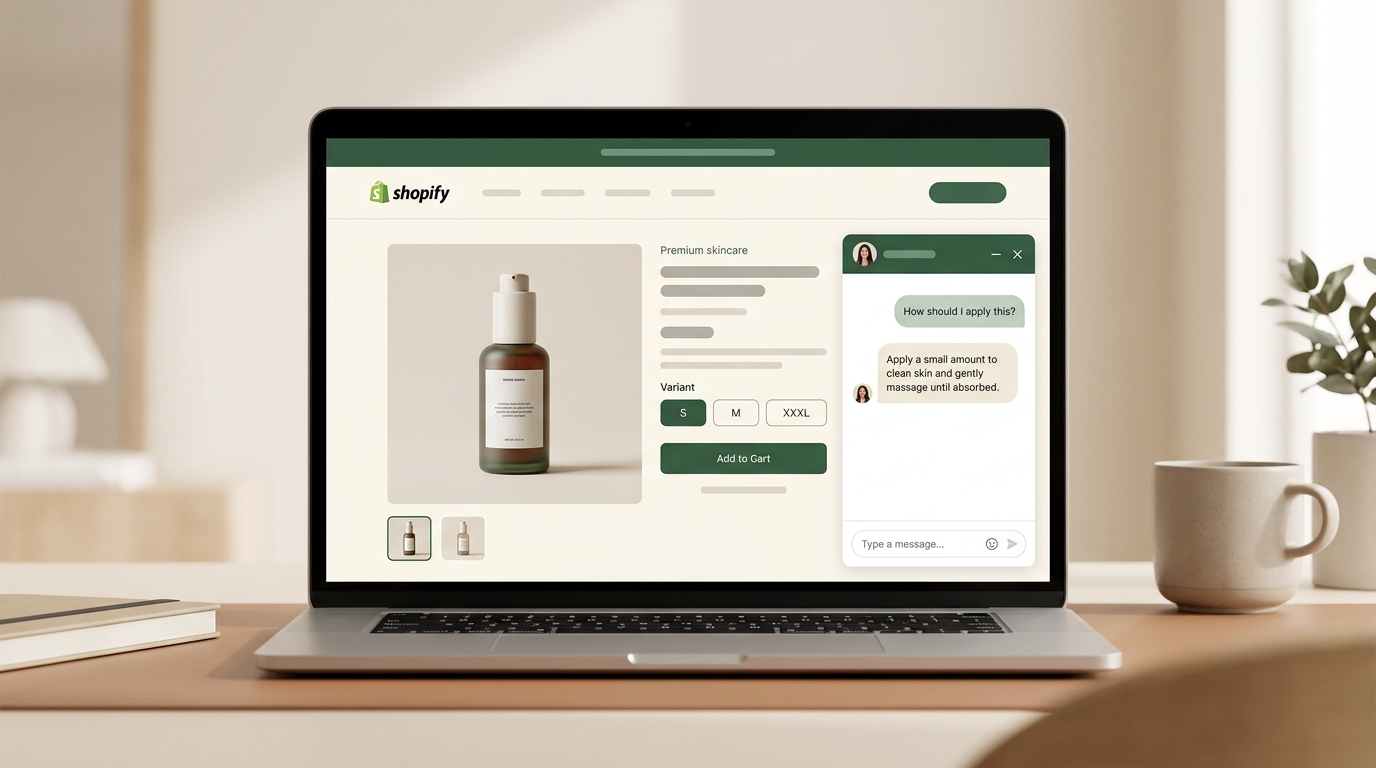
Disclosure: Dori is included in this comparison. We built it, so we're biased. To keep this useful, every claim in this article is based on official Shopify App Store data, each app's public documentation, or direct product testing. Where we couldn't verify a feature, we say so. Ratings and review counts are as of April 2026.
Quick verdict. We compared 7 Shopify AI shopping assistants: Dori, Tidio, Manifest AI, Rep AI, Alhena AI, Gobot, and Shopify Inbox. The scoring focuses on what actually helps shoppers buy — product-page Q&A, guided discovery, add-to-cart from chat, multilingual support, pricing, and honest tradeoffs. Skip to the comparison table.
TL;DR
Most "best Shopify chatbot" lists compare customer support tools. This guide focuses on a narrower question: which apps help shoppers buy? That means answering pre-purchase questions, working on product pages, supporting multiple languages, and letting customers add to cart without breaking flow.
There's no single "best" app. The right tool depends on your store type, traffic level, and what problem you're actually solving.
If you already know you want a Shopify AI shopping assistant that helps shoppers find products, get answers, and buy, that guide goes deeper on the selling side specifically.
Quick picks by use case:
- Best for product-page Q&A + guided discovery → Dori
- Best for live chat with human agents + AI backup → Tidio
- Best for GPT-style conversational shopping → Manifest AI
- Best for proactive engagement on high traffic → Rep AI
- Best free starting point → Shopify Inbox
What We Evaluated (And Why)
We scored each tool on criteria that matter for pre-purchase conversion, not customer support ticket deflection:
- Pre-purchase product Q&A — Can the AI answer "is this safe for sensitive skin?" or "will this fit a size 12?"
- Product page context — Does the AI know which product the customer is looking at, or does it start every conversation from scratch?
- Catalog discovery — Can shoppers describe what they want in natural language and get relevant results?
- Add-to-cart from chat — Can the customer buy without leaving the conversation?
- Multilingual support — Does it actually converse in other languages, or just detect them?
- Setup friction — How long from install to live? Does it require training data or onboarding calls?
- Pricing transparency — What does it actually cost at your traffic level?
- Social proof — Shopify App Store rating and review count.
Support Chatbot vs. Shopping Assistant: Why the Difference Matters
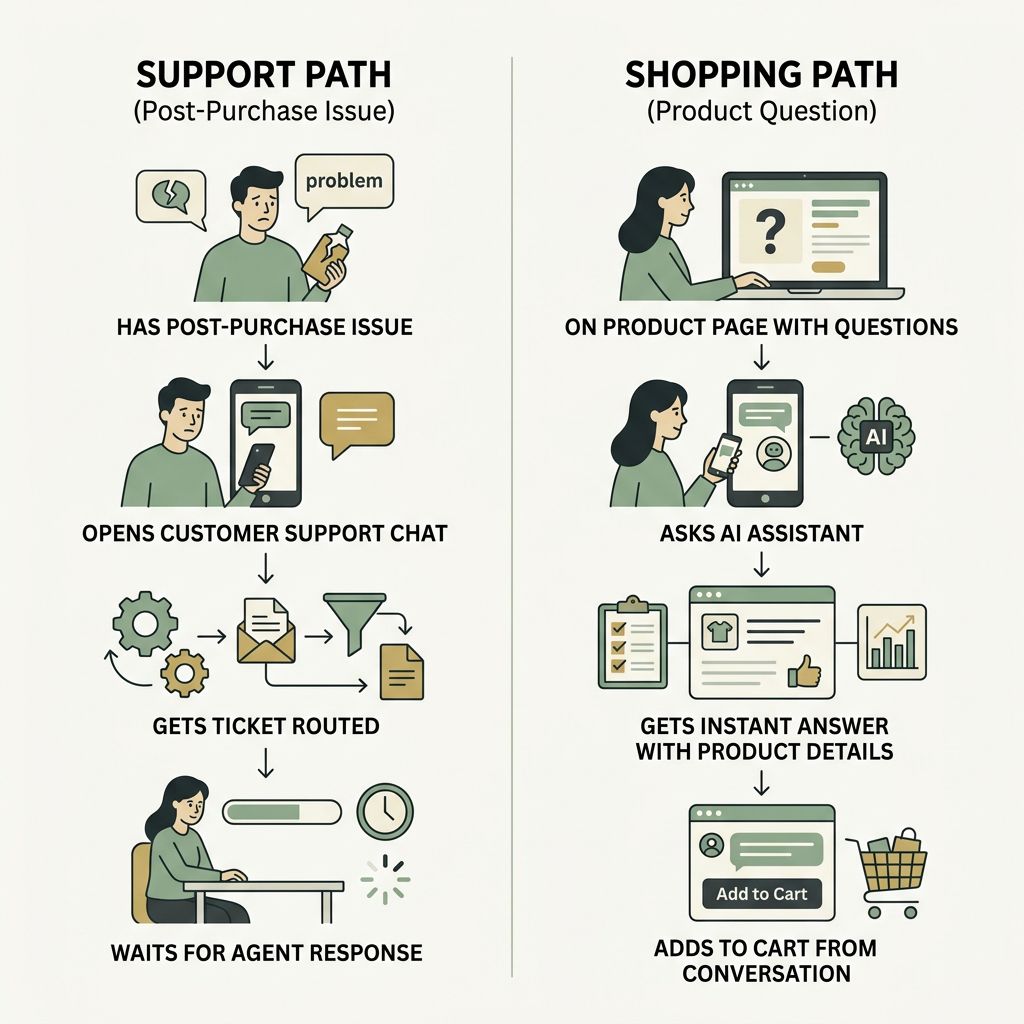
Here's the mistake most merchants make: they search for a "chatbot" when they actually need a "shopping assistant."
A support chatbot handles post-purchase problems. Order tracking. Return requests. Password resets. It's reactive — a customer has an issue, the bot tries to solve it. Tools like Gorgias, Zendesk, and Re:amaze excel here.
A shopping assistant handles pre-purchase decisions. "Is this moisturizer safe for sensitive skin?" "What's the difference between the Pro and Standard model?" "I need a gift under $50 for someone who likes hiking." It's proactive — it helps a browser become a buyer.
Most Shopify stores already have a way to handle support tickets. What they're missing is a tool that answers the questions customers have before they buy. And unanswered pre-purchase questions are expensive: Forrester found that 53% of shoppers abandon a purchase because they can't find quick answers.
That's the lens we used for this comparison. Every tool on this list was evaluated on how well it helps customers buy, not just how well it deflects tickets.
The Comparison
| Dori | Tidio | Manifest AI | Rep AI | Alhena AI | Gobot | Shopify Inbox | |
|---|---|---|---|---|---|---|---|
| Focus | Shopping assistant | Live chat + AI | Shopping assistant | Sales AI agent | Shopping assistant | Quiz + chat | Basic messaging |
| Product page AI | Yes (Product Pal) | Sitewide only | Yes | Sitewide only | Yes | No | No |
| Guided discovery (routines, bundles, comparisons) | Yes (Sidekick) | No | Basic | No | Basic | Quiz only | No |
| Add to cart from chat | Yes | No | Yes | No | Yes | No | No |
| Languages | 60+ (auto-detect) | 6 storefront | English (primary) | English-focused | 20+ | English | English |
| Setup time | ~2 minutes | ~5 minutes | ~5 minutes | Onboarding required | ~5 minutes | ~10 minutes | Instant |
| Starting price | Free (200 convos) | Free (limited) | $9/mo | $99/mo | Varies | Free (limited) | Free |
| Shopify rating | 5.0 ★ (12) | 4.7 ★ (1,245) | 4.8 ★ (60) | 4.7 ★ (108) | 4.9 ★ | 3.2 ★ (20) | 4.7 ★ (5,304) |
Data from official Shopify App Store listings and public pricing pages, updated May 2026.
Dori
What it does: Dori combines two shopper-facing experiences in one app: Product Pal for product-page questions and Sidekick for storewide discovery.
Product Pal sits directly on product pages. Its job is simple: answer the question a shopper asks about the product they are already viewing. That matters for categories like skincare, supplements, fashion, and electronics, where the decision depends on ingredients, sizing, compatibility, materials, or variant differences.
Sidekick is the floating storewide assistant. It is strongest when the shopper knows what they want help with, but not the exact product name. In the current widget, those recommendation layouts are explicit: single pick, shortlist, routine, and explore.
- "Build me a nighttime routine for dry, sensitive skin under $120."
- "Compare the Classic and Pro versions for oily skin."
- "I need a gift under $50 for someone who likes hiking."
What stands out: Most tools on this list are strongest in one lane. Dori is unusual because it covers both the product-page decision and the broader discovery flow in the same app, while still letting shoppers add products to cart inside the conversation.
60+ languages with automatic detection is also a real advantage for stores selling internationally.
Setup: Install from the Shopify App Store, configure the widget, and publish. Dori is free to start: the free plan includes 200 conversations per month and up to 500 products.
Who it's for: Stores with real pre-purchase questions, broad catalogs, or multilingual traffic. Especially strong for skincare, supplements, fashion, electronics, and gift-heavy stores.
Who it's not for: Stores that mainly need post-purchase support like order tracking and returns. In that case, pair Dori with a dedicated help desk rather than treating it as your whole support stack.
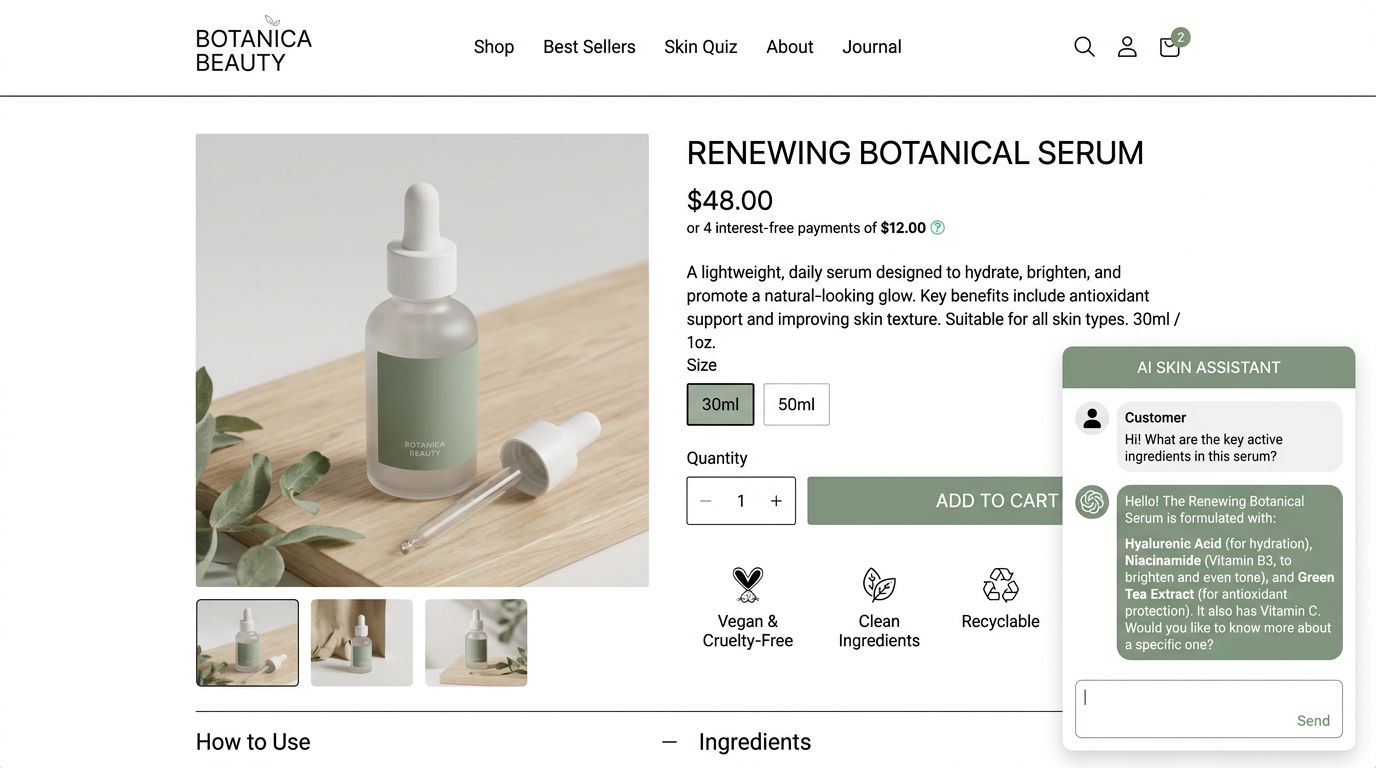
Dori's Product Pal answering a product question on a Shopify product page. Try the live demo (password: ibiesk).
Honest caveat: Dori is still early in social proof. The product looks strong, but 12 Shopify App Store reviews is a very different signal from Tidio's 1,245.
Rating: 5.0 ★ · 12 reviews · Free
Tidio
What it does: A mature customer communication platform combining live chat, an AI assistant (Lyro), chatbot builder, and help desk. Tidio has been on Shopify since 2014 and is one of the most widely installed chat apps.
What stands out: The hybrid model. Human agents and AI work side by side — Lyro handles routine questions, and complex conversations get routed to a person. The live chat interface is polished and battle-tested.
Who it's for: Stores that have (or plan to hire) support staff and want AI to handle the overflow. Good for stores where some conversations genuinely need a human touch — custom orders, complex returns, VIP customers.
Who it's not for: Stores looking for a dedicated Shopify shopping assistant as the main product. Tidio's Lyro can recommend products, use Shopify inventory, and add items to cart, so it is not a generic support bot. The difference is product shape: Tidio is packaged around customer communication, live chat, ticketing, and inbox workflows, while Dori is built around product-page Q&A, guided discovery, and the buying flow itself. If your main problem is "customers leave because they have unanswered product questions," compare that specific buying experience, not only the chat widget.
If you are weighing the two specifically, see our guide to the best Tidio alternative for Shopify.
Pricing note: The free plan is limited. Tidio lists paid customer-service plans starting at $24.17/mo and Lyro AI starting at $32.50/mo from 50 AI conversations. Compare the exact usage you need before choosing.
Rating: 4.7 ★ · 1,245 reviews
Manifest AI
What it does: A GPT-powered shopping assistant for Shopify. Manifest AI offers conversational product discovery, recommendations, and add-to-cart from chat. It integrates on product pages and storewide.
What stands out: The conversational quality is strong. GPT-based responses feel natural, and the product recommendation engine can handle nuanced requests. Add-to-cart from chat works.
Who it's for: Stores that want a modern, conversational shopping experience and have a primarily English-speaking customer base. Good for stores with straightforward product catalogs where AI accuracy is easy to verify.
Who it's not for: Stores with highly technical products where accuracy is critical. GPT-based systems can occasionally generate confident but incorrect responses. If your products involve safety considerations (supplements, skincare ingredients, medical devices), monitor AI answers closely. Language support beyond English is limited based on what's publicly documented.
Pricing: Starting at $9/mo.
Rating: 4.8 ★ · 60 reviews
Rep AI
What it does: A premium AI sales associate that uses behavioral AI to engage shoppers proactively. Instead of waiting for customers to open a chat, Rep AI detects exit intent, hesitation, and browsing patterns and initiates conversations at the right moment.
What stands out: The behavioral targeting approach. Most chatbots are passive — Rep AI is designed to intervene before a customer leaves. The proactive engagement model is genuinely different from everything else on this list.
Who it's for: Established stores with significant traffic (10K+ monthly visitors) and the budget for a premium solution. Stores that have optimized their product pages and checkout but are still seeing high bounce rates.
Who it's not for: Small or early-stage stores. At $99/mo starting price, the math doesn't work until you have enough traffic for behavioral AI to make a meaningful difference. Setup also requires onboarding rather than self-serve installation.
Rating: 4.7 ★ · 108 reviews · Starting at $99/mo
Alhena AI
What it does: A growing AI shopping assistant offering product-aware chat with product page integration and add-to-cart capabilities. Alhena has been expanding its feature set and content presence rapidly.
What stands out: Solid AI quality and product page integration at a competitive positioning. They're investing heavily in vertical-specific content (fashion, food & beverage, health).
Who it's for: Stores looking for an AI shopping assistant from a company that's actively building and iterating.
Who it's not for: Stores that need mature multilingual support or a long track record of stability. Alhena is growing fast but is still relatively new.
Pricing: Varies by tier — check the current Shopify App Store listing for updated pricing.
Rating: 4.9 ★ on Shopify App Store
Gobot
What it does: A quiz and guided shopping tool. Gobot helps customers narrow down product choices through structured questionnaires — "what's your skin type?", "what's your budget?", "what occasion is this for?"
What stands out: If your store benefits from a structured discovery flow (find your perfect skincare routine, match your fragrance profile), Gobot's quiz builder handles this well.
Who it's for: Stores where the product selection process follows a predictable decision tree. Beauty, skincare, and fragrance brands often get value from guided quizzes.
Who it's not for: Stores where customers have unpredictable, open-ended questions. Quizzes work when the questions are known in advance. If a customer wants to ask "can I use this moisturizer if I'm on tretinoin and have rosacea?", a quiz can't handle that. Gobot has also shifted its positioning toward first-party data collection and identity resolution, which means shopping assistance is no longer its primary focus.
Rating: 3.2 ★ · 20 reviews — the low rating and review count suggest merchants should evaluate carefully.
Shopify Inbox
What it does: Shopify's native, free messaging tool. Inbox provides live chat with AI-powered instant answers, suggested replies, and product recommendations within the conversation.
What stands out: It's free, native to Shopify, and includes AI features that many merchants don't realize exist. Shopify Inbox can suggest products and provide automated responses based on your store's information.
Who it's for: New stores that want basic chat without added cost. Stores that want to test whether chat engagement improves conversion before investing in a dedicated tool.
Who it's not for: Stores that need deep product Q&A, multilingual support, or product-page-specific AI. Inbox is a solid starting point, but it's not a specialized shopping assistant. The AI features are helpful but limited compared to purpose-built tools. If you are hitting that ceiling, see our guide to the best Shopify Inbox alternative.
Rating: 4.7 ★ · 5,304 reviews · Free
How to Choose
Forget "best overall." Ask what your store actually needs:
"My customers ask a lot of product questions before buying."
→ You need product page AI with catalog awareness. Look at Dori (Product Pal), Manifest AI, or Alhena.
"My customers need help choosing — routines, bundles, gifts, or comparing options."
→ Guided discovery matters more than chat. Dori (Sidekick) is built for this. Gobot handles the simpler case of fixed-path quizzes.
"I want live chat with a human team and AI automation."
→ Tidio is built for this. Shopify Inbox works as a free starting point.
"I have high traffic and want to reduce exit rates."
→ Rep AI's behavioral targeting is designed for this, if the budget fits.
"I sell internationally and need multilingual chat."
→ Most tools are English-first. Dori's 60+ language auto-detection is the strongest option here.
"I just want something free to start."
→ Shopify Inbox. It's already installed — turn it on. Dori is also free to start (200 conversations/month) and a no-risk way to test a dedicated shopping assistant.
Frequently Asked Questions
What's the difference between a support chatbot and a shopping assistant?
A support chatbot handles post-purchase issues: order tracking, returns, password resets. A shopping assistant handles pre-purchase decisions: product questions, comparisons, recommendations, and helping customers choose. Some tools do both, but most are stronger at one or the other.
Is Shopify Sidekick a shopping assistant?
No. Shopify Sidekick is a merchant-facing admin tool. It helps store owners with tasks like writing product descriptions, analyzing store data, and creating discount codes. It does not interact with customers on the storefront.
How much do these tools actually cost?
It ranges from free (Shopify Inbox, and Dori, which is free for 200 conversations/month) to $99+/mo (Rep AI). The real cost depends on your conversation volume. A store with 500 conversations per month will pay more on usage-based plans than on flat-rate plans. Check each app's pricing page for your specific volume.
Can AI chatbots handle complex product questions?
Some LLM-powered tools can handle nuanced product questions far better than rule-based bots, but accuracy depends on how well they are grounded in real product data. Tools built for shopping guidance, such as Dori and Manifest AI, are a better fit here than general live chat tools using AI as a support layer.
Ratings, review counts, and pricing from official Shopify App Store listings as of April 2026. Features verified against each app's public documentation. This article includes Dori, which we built — see disclosure at the top.