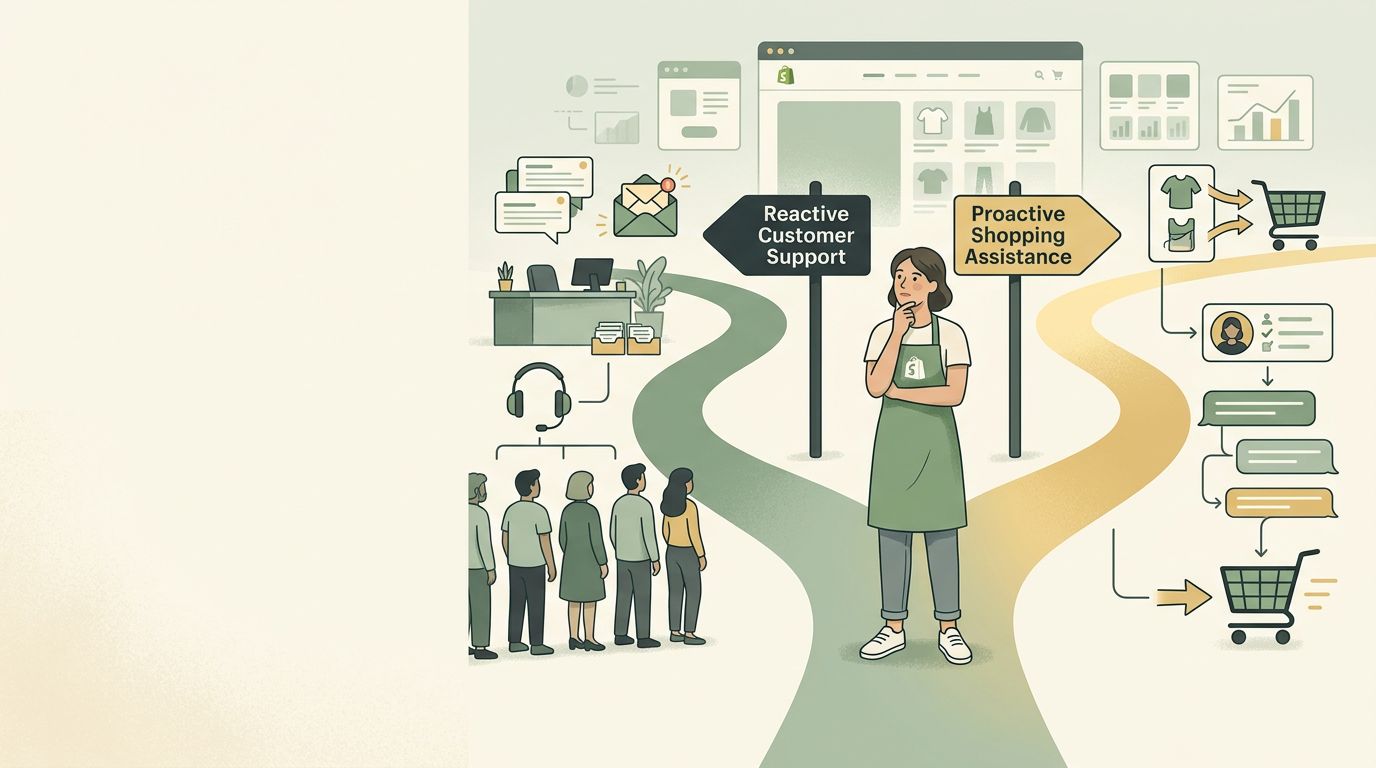
Quick take: Traditional search wins when shoppers know the exact term in your catalog. AI search wins when they describe needs, use imperfect language, or want guidance instead of a literal string match. Most Shopify catalogs see both — which is why the right answer is rarely "one or the other."
If a shopper walks into a physical store and says, "I need something for dry skin that feels light," a good associate does not wait for the exact word "moisturizer." They interpret the need and guide the customer toward the right shelf.
Many storefront search bars still cannot do that.
How traditional search works
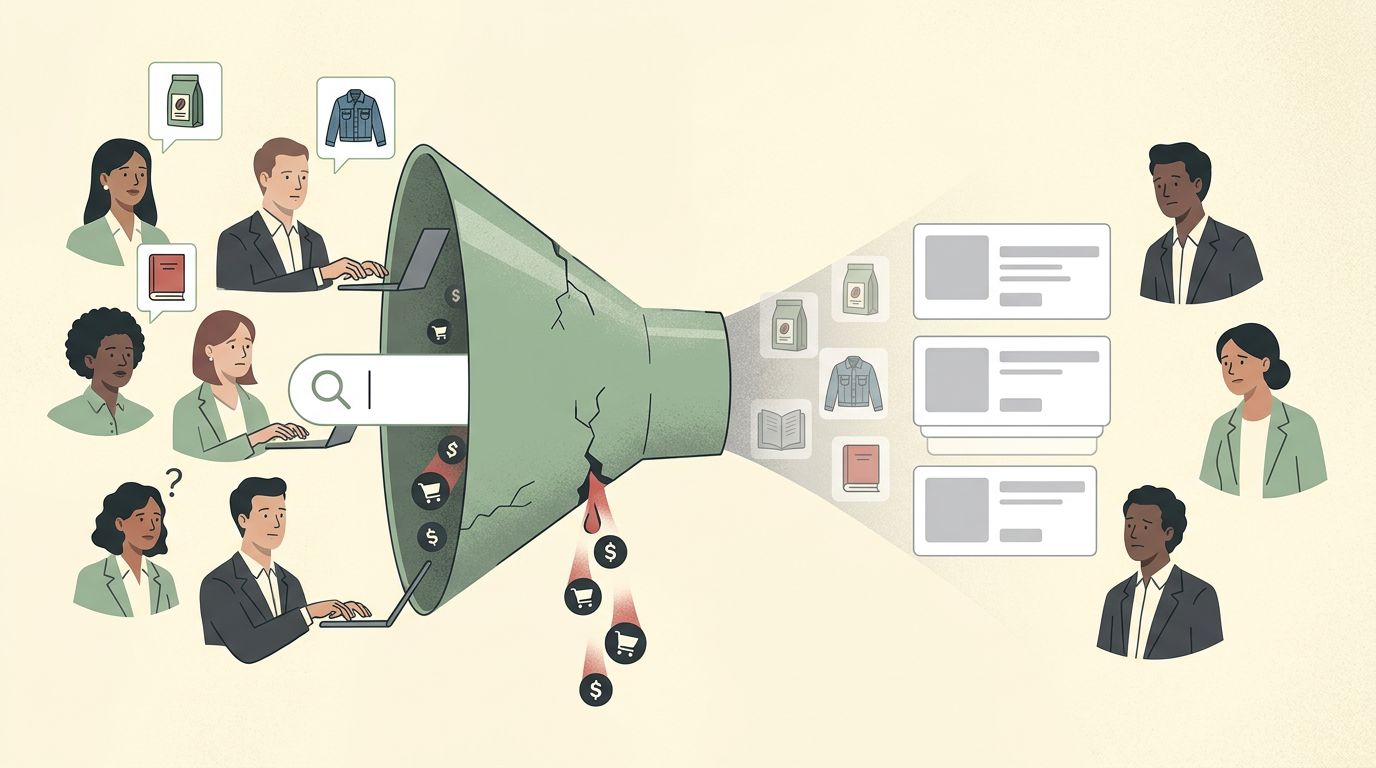
Traditional site search is built around keywords, product titles, tags, and exact or near-exact matching. It works well for high-intent shoppers who already know the item name, model number, or collection structure. It tends to break down when the customer thinks like a person instead of a database.
Where traditional search leaks money
| Failure mode | What the shopper types | What they actually want |
|---|---|---|
| Need-based language | "gift for a runner" | A curated selection by goal, not by SKU |
| Synonym gap | "treatment" | Your "serum" collection |
| Typo / fuzzy memory | "hyalurnoic acid" | Hyaluronic acid serums |
| Comparison intent | "50ml vs 100ml" | An explanation of the tradeoff |
| Follow-up | "smaller size?" | To refine the previous result without restarting |
Each of those is a buying intent. Each is a moment your search bar can either help or fail.
What AI search changes
AI search is not better because it sounds futuristic. It is better when it interprets intent, maps that intent to your catalog, and helps the shopper refine the result set without starting over.
That can mean:
- understanding natural-language descriptions
- recovering from vague or messy phrasing
- surfacing related products that solve the same need
- helping the shopper compare or narrow options
- continuing the conversation across follow-ups
Side by side
| Traditional search | AI search | |
|---|---|---|
| Best at | Exact keyword, model number, SKU lookup | Need-based queries, natural language, comparisons |
| Handles typos | Sometimes (with plugins) | Yes, by intent |
| Handles synonyms | Only with synonym dictionaries you maintain | Yes, by understanding meaning |
| Follow-up questions | One-shot — shopper restarts | Continues the same session |
| Comparison help | Returns multiple results, no explanation | Can explain tradeoffs |
| Setup cost | Built into Shopify | App or platform install |
| Maintenance | Synonym lists, tags, manual rules | Catalog data quality + occasional review |
Where AI search still needs guardrails
AI search is not magic. It still needs strong catalog data, clear product descriptions, and merchant oversight. If the underlying product information is weak, the experience will still disappoint.
The right comparison is not "old vs new." It is "literal matching alone vs guided discovery backed by better context."
Which stores benefit most
AI search shines in stores with:
- large or complex catalogs
- high-consideration products (skincare, supplements, electronics, fashion)
- strong cross-sell and bundle opportunities
- customers who search by problem, goal, or fit
Stores selling very simple products can still benefit, but the gains are most dramatic in categories with more nuance.
What to measure after switching
- search conversion rate
- zero-result and low-result query rate
- time to first product click from search
- average order value for search-assisted sessions
- repeat-customer conversion from search sessions
These tell you whether the store is becoming easier to shop, not just whether the search box is being used.
Frequently asked questions
Will AI search replace my Shopify search bar?
It can sit alongside it. Most AI search apps either replace the default Shopify search or surface as a chat-style assistant the shopper opens when they want help. Stores rarely need to remove anything to add AI search.
Does AI search hurt SEO?
No. SEO depends on indexable product and collection pages, not on which search box your shoppers use. The quality of your catalog content matters far more than the search engine on top of it.
How much catalog cleanup do I need before adding AI search?
Less than most teams assume. Good AI search adapts to imperfect descriptions, but it gets noticeably better when titles include the obvious benefit, descriptions cover the top 3 buying questions, and tags reflect how shoppers actually describe needs.
Is AI search the same as a chatbot?
Not quite. A chatbot is a conversational interface. AI search is the underlying retrieval layer. Many shopping assistants combine both — a chat surface that uses AI search to find the right products. For the broader picture, see our guide to Shopify Sidekick vs AI shopping assistants.
For the retention angle, read our article on search and repeat revenue. If you are evaluating shopping assistants more broadly, start with our 2026 buyer's guide or the product page chatbot deep-dive.
Try Dori if you want AI-powered discovery alongside product-page answers and shopping assistance.